Lobotomies
19 March 2025
Deep Dive
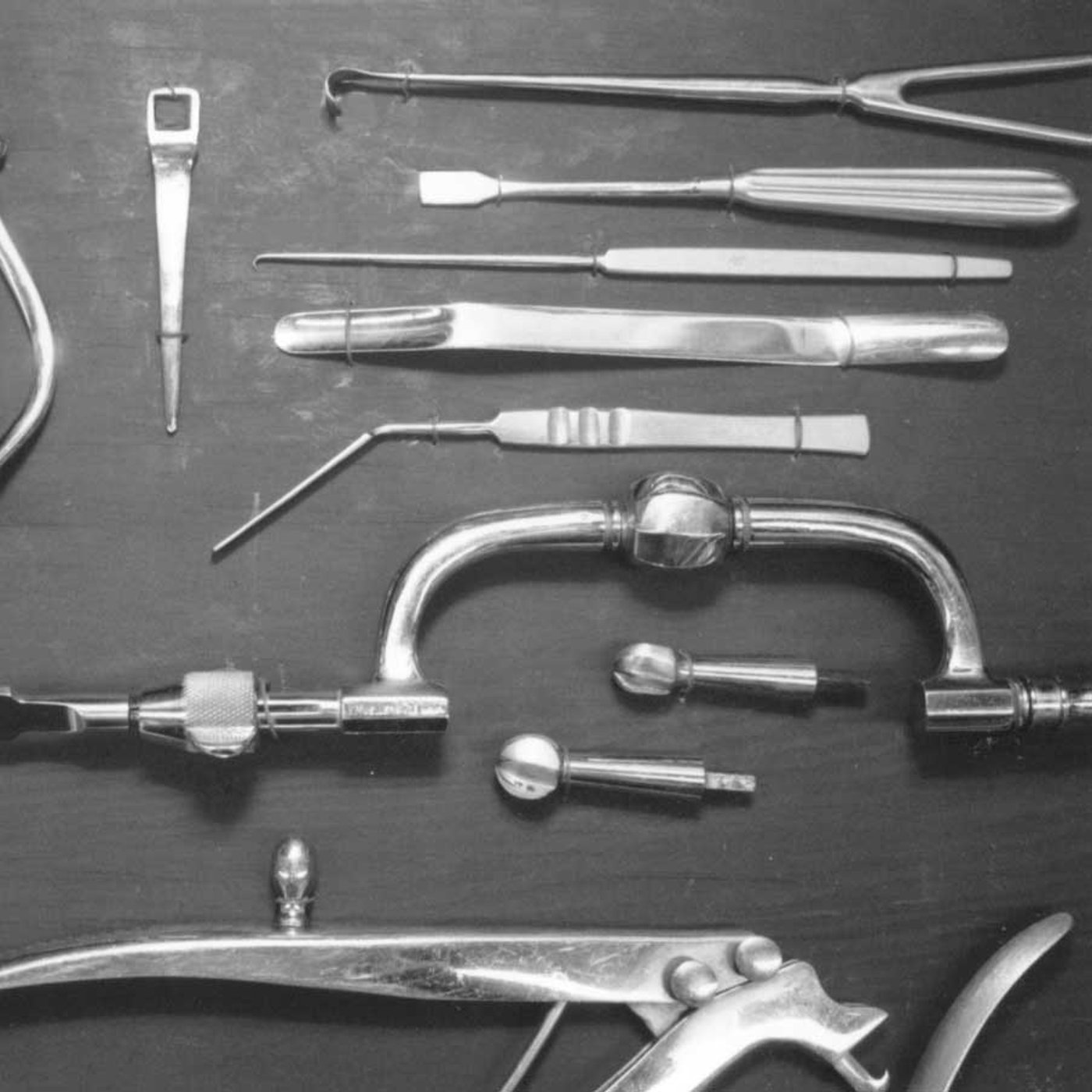
The lobotomy: one of the strangest and most controversial surgical procedures of all time, with arguably one of the darkest histories. In this highly requested episode, Chyaz explores how the lobotomy came about, who performed the infamous surgery and how it affected those who were subjected to it, as well as a couple of notable lobotomy patients. This bizarre episode is not for the squeamish…
For links to mental health resources, visit out About page.
Watch on YouTube
Themes
- Medical innovation and ethical failure
- Human cost of psychosurgery
- Marginalisation in psychiatric treatment
- Evolution of psychiatric care
Questions Explored
What is a lobotomy and how was it performed in the early 20th century? + −
A lobotomy, as described in the episode, is a form of psychosurgery intended to sever connections in the frontal lobes; Egas Moniz’s 1935 leucotomy involved drilling skull holes and sweeping a leucotome, while Walter Freeman’s later transorbital method used an ice pick-like instrument through the eye socket and electroshock instead of full anaesthetic. Chyaz Samuel lays out the procedure in Things Are About To Get Weird, Episode 69: Lobotomies.
Where and when did lobotomies originate and become widespread? + −
The episode traces origins to Gottlieb Burckhardt’s late 19th century topectomies in a Swiss asylum, through Moniz’s 1935 leucotomy in Portugal, then rapid expansion in the US and the UK in the 1940s, where surgeons like Walter Freeman and Wyley McKissock performed thousands of operations; Moniz later received a Nobel Prize. Chyaz Samuel walks through this timeline in Things Are About To Get Weird, Episode 69: Lobotomies.
Why were lobotomies controversial and what were the typical outcomes for patients? + −
Lobotomies were controversial because they were invasive, often performed blind through small skull holes, and produced mixed results; a UK review found roughly one third of patients improved, one third saw no change and one third worsened, while Freeman’s reported US fatality rate was about 15%, with many left unable to communicate or care for themselves. Chyaz Samuel covers these outcomes in Things Are About To Get Weird, Episode 69: Lobotomies.
Who was Howard Dully and why is his story significant? + −
Howard Dully was a child lobotomy patient who received the operation aged 12 in December 1960 at Dr Freeman’s clinic in San Jose at his stepmother’s request; he later spoke publicly about the lasting mental effects, published a book and became a prominent voice against the practise, and the episode notes he died recently at age 76. Chyaz Samuel tells Howard’s story in Things Are About To Get Weird, Episode 69: Lobotomies.
Who was Rosemary Kennedy and how did a lobotomy affect her life? + −
Rosemary Kennedy, sister of John F Kennedy, had a lobotomy in November 1941 performed by Walter Freeman and James Watts without her knowledge or consent; the operation left her severely disabled, institutionalised for decades, and her family did not visit for twenty years, a point the episode highlights when discussing consent and family decisions. Chyaz Samuel discusses Rosemary Kennedy in Things Are About To Get Weird, Episode 69: Lobotomies.
Why were women, gay men and children disproportionately subjected to lobotomies? + −
The episode explains that social prejudice and institutional power shaped who received lobotomies: women made up a large share of operations despite men being more numerous in institutions, gay men were targeted as a perceived problem to be cured, and some children were operated on, with Freeman’s series including very young patients; this pattern raises questions about bias and consent. Chyaz Samuel explores these demographic patterns in Things Are About To Get Weird, Episode 69: Lobotomies.